SOIL MYCORESTORATION EXPERIMENTS (Ongoing project)
With particular natural capacities, such as the absorption of nutrients and toxins from soils; or bio-electrical transmission between plant species, fungis are a great source of possibilities for sustainability and particularly "mycorremediation", a process in which the mycelium degrades pollutants from a substrate.
In 2019 I begin to explore in some experiments with Oyster fungus mycelium, growing it in mining tailings substrates obtained from Chilean mines. This material is a waste from mining activity and very contaminated with heavy metals. In this context mycelium can create restorative possibilities.
The last series of these experiments were developed in 2022, at Hambach Forest (Germany), an area that was planned to be cleared to place the Hambach surface mine by RWE AG (a multinational energy company). In 2012, there were many protests and activists occupations against the mine, and in 2020 a law was passed to preserve the forest. This situation is a good example of an environmental problem that embraces political issues and the community. In 2022, I made an excursion for obtaining little samples from this soil, as a way to reflect, through mycelium, about eventual restorative possibilities for a mining affected territory, creating an aesthetic focus on this problem and speculative solutions.
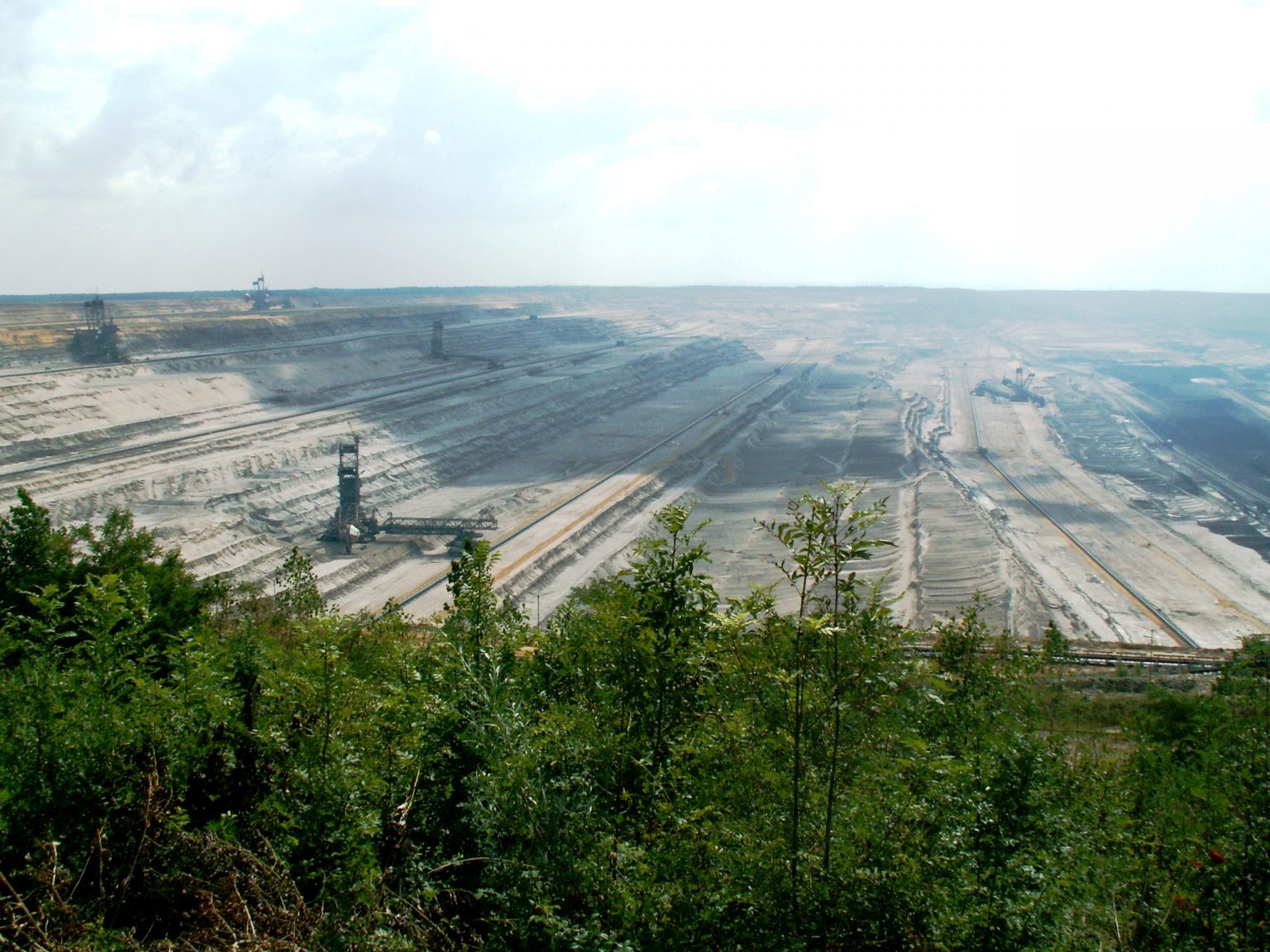
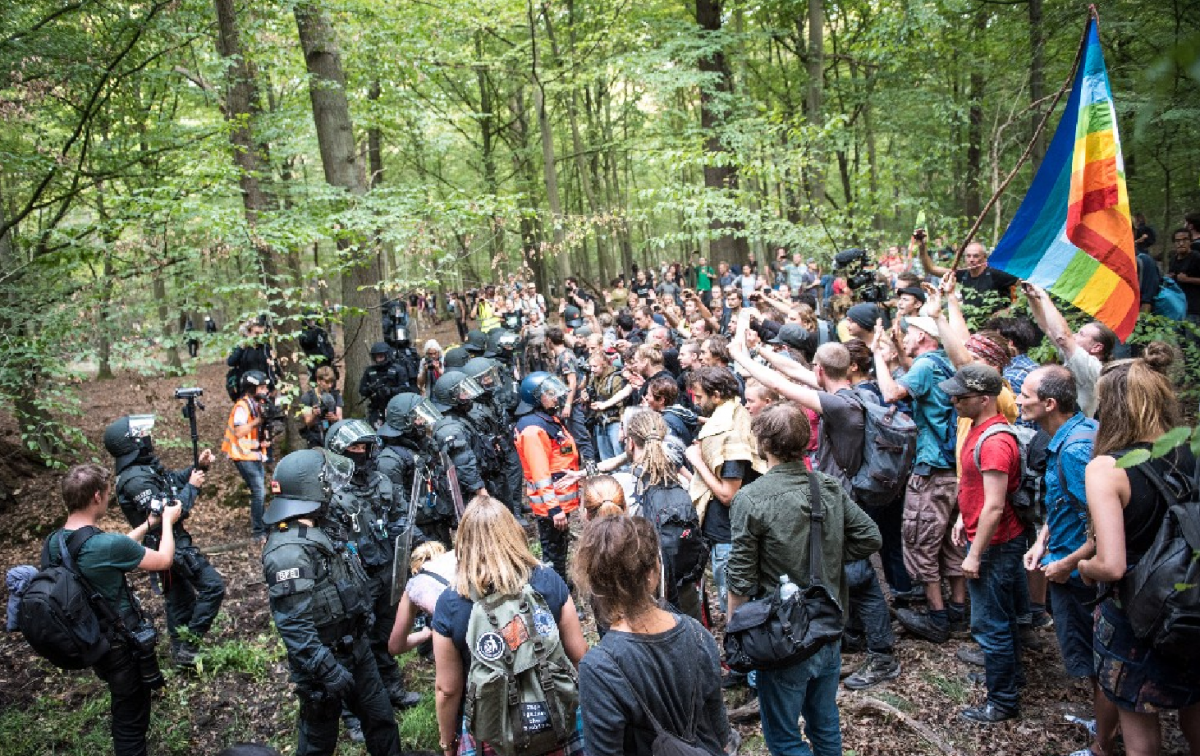
Registers of activist's protest on Hambach Forest.
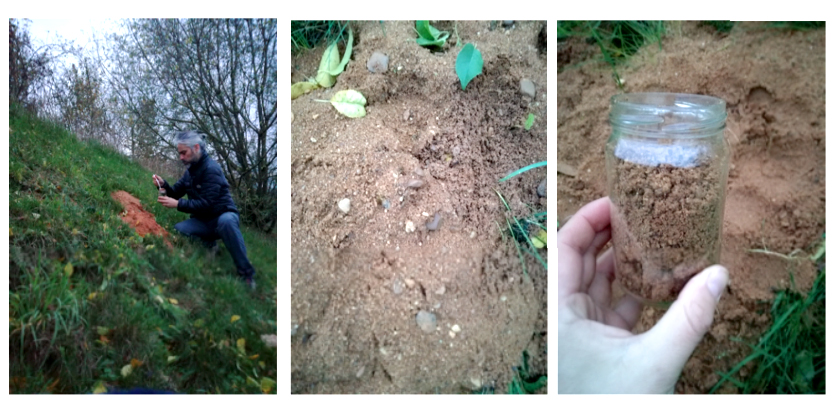
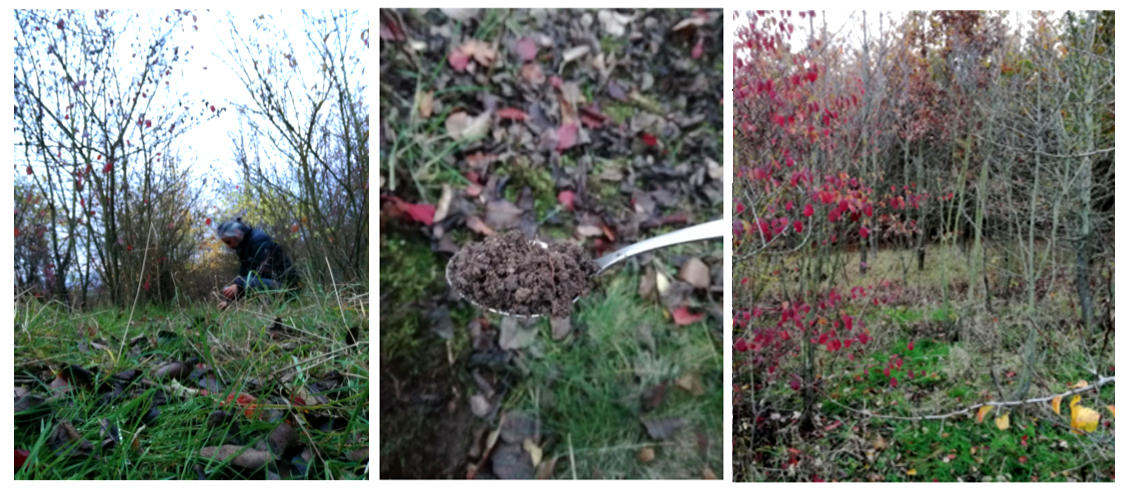
Hambach Forest, Germany. Soil sample collection
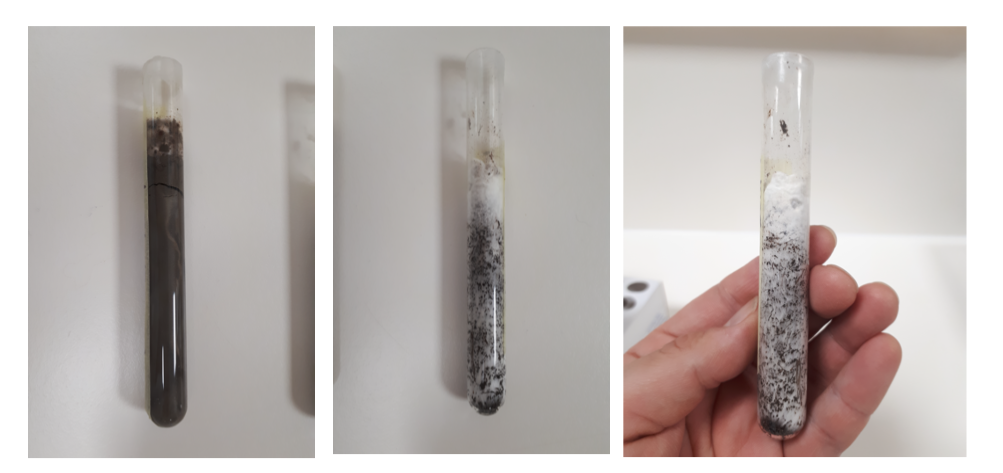
Growth comparition of Oyster fungi on test tubes:
The image above shows the different results obtained at the moment, growing Oyster fungy over Hambach Forest's soils samplers.
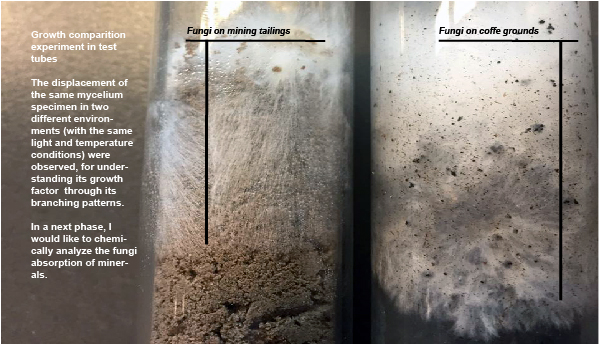
In 2019 I developed a first approach to this research. I developed some comparative experiments in test tubes at different sizes; training and comparing the growth pattern of Oyster fungy on mining tailings substrate (from north Chilean mines) and coffe ground substrate.
These tests have served to verify the survival capacity and growth factor of the mycelium in an extreme context v/s a fertile substrate. This also act as an alternative method of measurement.
